
RTX Spark desktops launch from ASUS, Dell and MSI
The compact Windows PCs bring NVIDIA’s local AI platform to dedicated desktops. But some supported workflows still use cloud models, limiting the privacy and cost benefits of on-device processing.
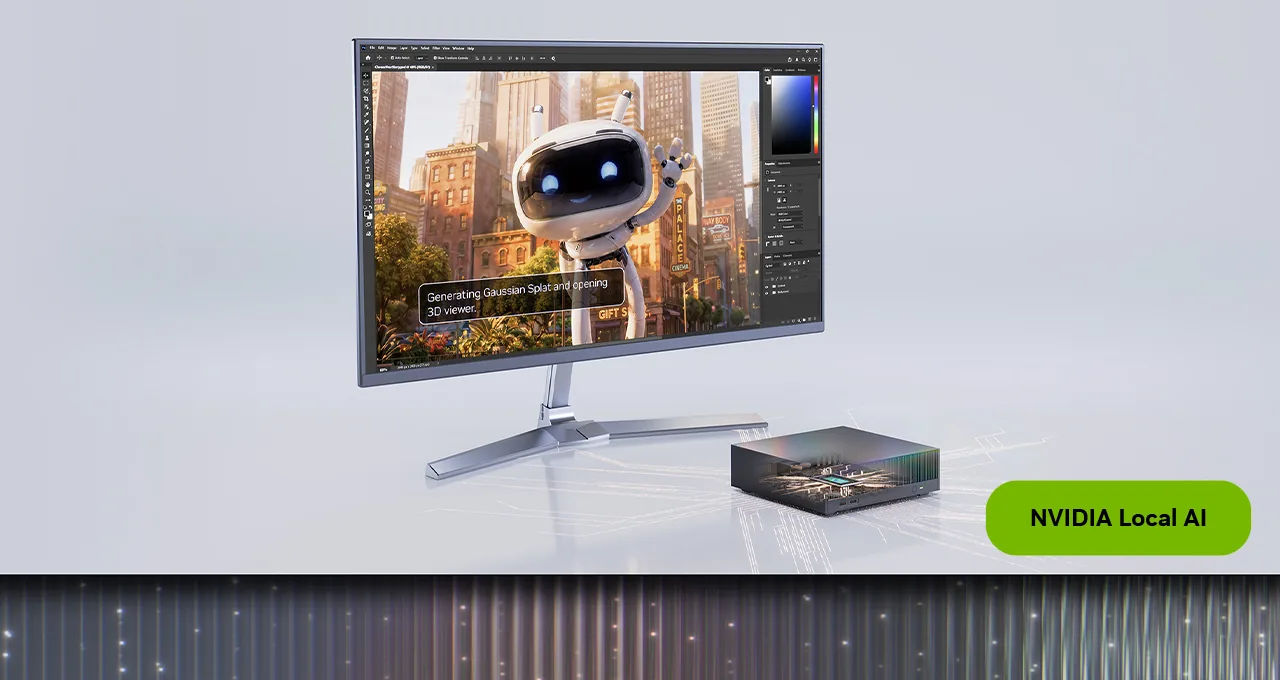
Photo: Source: blogs.nvidia.com
RTX Spark moves beyond laptops
RTX Spark compact desktops from ASUS, Dell and MSI became available to purchase on November 18, 2026, NVIDIA announced. The Windows systems target developers, creators and artificial intelligence enthusiasts who want to run supported AI tasks on their own PCs.
The desktops expand an existing RTX Spark laptop lineup. The Verge, which also reported the desktop launch, says the first laptops arrived earlier in 2026.
NVIDIA also plans RTX Spark desktops from Acer, GIGABYTE and HP, but its announcement gives no specific release dates for those systems.
A separate machine for ongoing AI work
NVIDIA’s practical pitch is to separate ongoing AI work from a user’s laptop. A dedicated desktop can keep agents—software that carries out tasks—and scheduled jobs running while the laptop travels or handles other work, the company says.
The company describes uses including local AI models, image and video generation, and supported model fine-tuning, which means further training a model for a particular task.
NVIDIA lists a 20-core Grace central processor and a Blackwell RTX graphics processor. It also advertises up to 128GB of unified memory, a shared memory pool for the processors. That is a maximum, not a promise that every configuration includes 128GB.
Local AI does not mean every task stays on the PC
For supported models running locally, NVIDIA says the code and files those tasks process stay on the PC. Those tasks also avoid usage-based cloud model charges. The distinction matters: the benefits apply to locally processed work, not automatically to an entire workflow.
NVIDIA’s Switchyard software, available in Hermes, routes tasks between local and cloud models. Advanced reasoning draws on cloud models, according to the company, so not every agent workflow it describes is exclusively local.
For prospective buyers, the useful question is therefore task-specific: which work will run on the desktop, and which will go to the cloud? That boundary determines where NVIDIA’s stated privacy and cloud-fee benefits apply.
Share this story
Related Stories
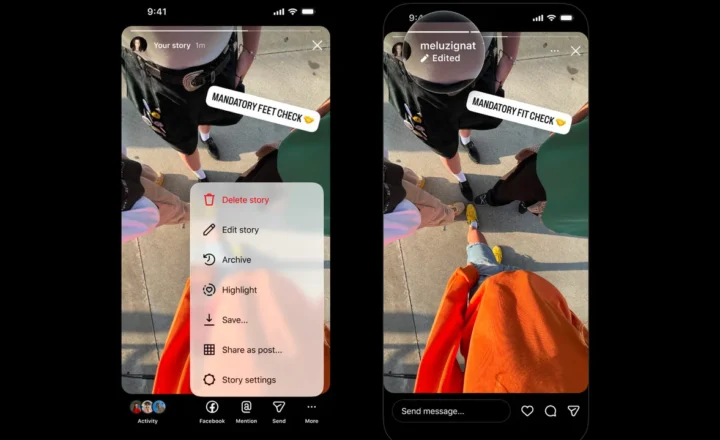
Instagram adds a 15-minute window to edit published Stories
Instagram says users can revise Stories without losing views, likes or replies. The feature is rolling out, and viewers will see an edited label.

Will Wright’s MyMems plans to turn personal memories into an AI game
The planned game would turn players’ recollections into characters, places and puzzle-solving teams. Ars Technica reports a 2027 release target.

GTA VI review finds strength in life between heists
Ars Technica praises Jason and Lucia’s everyday moments alongside their criminal exploits, but finds uneven missions and limited relationship choices.

Google makes Gemini Tasks free for Gemini 4 Hydrogen users
The expansion brings an action-focused mode to more Gemini users. Google says Tasks can book appointments, make purchases and sign into websites on request.
See an error? Request a correction.