
Google Opens SynthID Detector Website for Public AI Watermark Checks
The free service checks images, video and audio for supported AI watermarks. A negative result does not prove that the content is authentic.

Public access expands watermark checking
Google opened its dedicated SynthID Detector website to the public on October 7, 2026. Users can check images, video and audio for supported watermarks that indicate artificial intelligence (AI) involvement.
A SynthID watermark is an invisible signal embedded in image and video pixels or audio waveforms. The detector looks for that signal to help identify media created or edited with supported AI tools.
Google previously provided versions of the detector to journalists and other media professionals. It also offers watermark checking through Gemini. The dedicated public website adds another way to use the technology.
Free checks require an account
The website is free, but users must sign in with a Google, OpenAI or Apple account. According to Google, each user receives a daily quota of approximately 10 checks across images, video and audio.
The expanded detector supports watermarks associated with Google, OpenAI, NVIDIA and Kakao. According to Ars Technica, the previous detector checked only Google's version of SynthID; the expanded service recognizes partner versions, including those used in ChatGPT images.
Google says support for images created or edited with Apple Intelligence is coming soon. That support is separate from the ability to sign in with an Apple account.
What a SynthID Detector result can tell you
A detected watermark can indicate AI creation or editing, but the public website does not distinguish between those uses. It also does not identify which parts were altered. A positive result therefore cannot tell users how much of the content involved AI.
A negative result has a different limit: it cannot establish that the media is authentic. AI content may carry another watermark system or no watermark at all. Engadget also reports that watermarks can sometimes be stripped.
For readers checking media, the useful distinction is between finding a supported signal and proving authenticity. The service can supply evidence of AI involvement, but the absence of that evidence does not settle where the content came from.
Share this story
Related Stories

Amazon opens TorchNeuron beta to ease PyTorch use on Trainium
Amazon says developers can move PyTorch applications to Trainium with a basic configuration change. A separate open-source release is planned for Tuesday.

Tesla Sets 2028 Roadster Production Target; Final Prices Still Unannounced
Tesla lists reservation deposits of $50,000 for Performance and $250,000 for Thrust, but its production target does not establish when customers will receive their cars.

Apple sets iPhone Duo preorders for October 16
The foldable iPhone Duo pairs an outer screen with a larger inner display for multitasking. Apple says its Siri AI features are rolling out in an…
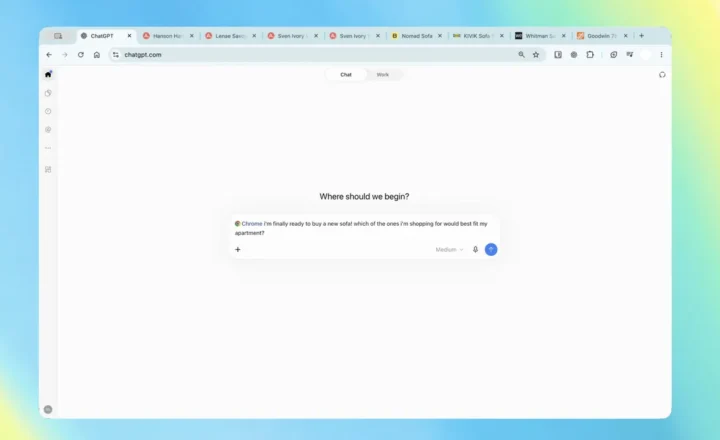
ChatGPT Chrome Extension Adds Open-Tab Answers and Browser Tasks
The update lets users ask questions about open pages and request browser actions through ChatGPT Work, according to supplied reporting.
See an error? Request a correction.